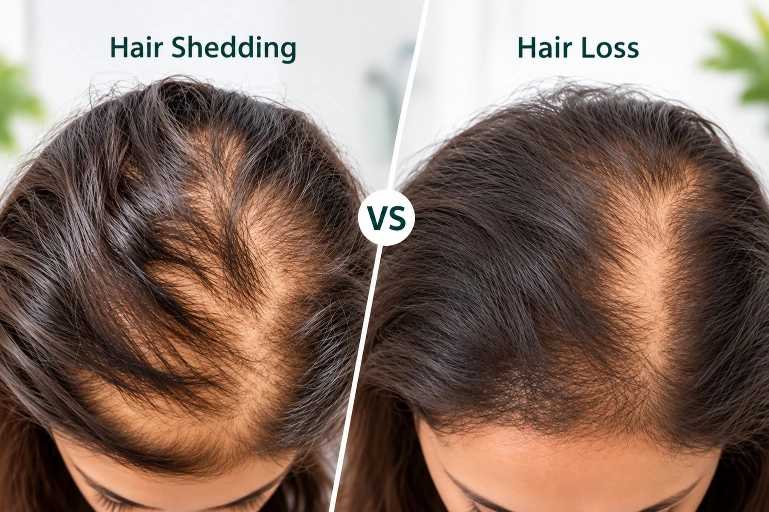
Finding more hair than usual in your brush or shower can make you worry. You may wonder if it’s normal or if your hair is starting to thin. Knowing whether you’re dealing with hair shedding vs pattern hair loss matters because the two don’t always have the same cause or need the same care. Hair shedding often happens when more hairs fall out than usual, while pattern hair loss usually causes slow thinning in certain areas of your scalp. Sometimes, both happen together. Understanding these changes can help you know what to look for, when to get help, and what to expect from hair regrowth.
Hair Shedding vs Pattern Hair Loss: What Are the Main Differences?
Hair shedding is a normal part of hair growth. Older hairs fall out, and new ones grow in their place. Sometimes, you may lose more hair than usual because of stress, illness, or other changes in your body.
Pattern hair loss happens more slowly. Over time, certain hair follicles start growing thinner and shorter hairs. You may notice your hairline moving back, your part getting wider, or more scalp showing through your hair.
Here’s a simple comparison to help you understand the differences.
| Feature | Excessive Hair Shedding | Pattern Hair Loss |
| How it starts | Often noticed suddenly | Usually develops slowly |
| Where it happens | Often across the scalp | Usually around the hairline, crown, or part |
| Common causes | Illness, major stress, childbirth, or weight changes | Family history and sensitivity to certain hormones |
| Outlook | Often improves once the cause is resolved | Usually continues without treatment; some treatments can help slow it |
These are common signs, but they don’t tell the whole story. Other health conditions can also cause hair to fall out. A healthcare professional can help find out what’s happening.
What Causes Excessive Hair Shedding?
Most people lose around 50 to 100 hairs a day, which is normal. Hair grows in cycles of growth, rest, and shedding, and a new hair can grow from the same follicle.
Illness, stress, or major changes in your body can push more hairs into the resting phase. These hairs often fall out two to three months later, causing more shedding than usual. This is called telogen effluvium, and it’s a common cause of excessive hair shedding.
Common triggers include:
- Illness or high fever: After a serious illness, your body may shed more hair.
- Major stress: Major life events or ongoing stress can affect your hair growth cycle.
- Childbirth: Hormonal changes after having a baby can cause temporary hair shedding.
- Rapid weight loss: Losing weight quickly or not having enough nutrients can cause hair loss.
- Certain medications: Some medicines can cause extra shedding as a side effect.
One thing that often surprises people is the delay. You may start losing more hair two or three months after the event that caused it.
For example, you may recover from an illness in January but notice more hair in your brush in March. Since you’re already feeling better, you may not connect the two. Shedding can also continue if the cause hasn’t been resolved. If you can’t find a reason for your shedding, it’s worth getting checked.
What Does Pattern Hair Loss Look Like in Men and Women?
Pattern hair loss, also called androgenetic alopecia, often runs in families. Certain hair follicles react to hormones and slowly produce thinner, shorter hairs. It affects both men and women, but the signs often look different.
Common Signs of Male Pattern Hair Loss
Men often notice their hairline receding, especially around the temples. This can cause the forehead to appear wider. Some men may notice thinning or bald spots on the crown of their head. These areas may become more noticeable over time, but not all men will experience hair loss the same way.
Common Signs of Female Pattern Hair Loss
Women often notice thinning on the top of the head. The part may look wider, or more scalp may show when styling. Some women also find their ponytail feels thinner. Most keep their front hairline, though some notice thinning around the temples. These changes can happen at different ages and don’t always mean hormone levels are abnormal.
How Can You Check Changes in Your Hair at Home?
You don’t need to count every hair that falls out. Instead, notice when the changes started and whether your hair is getting thinner over time. Did you suddenly start losing more hair, or has it been happening slowly?
Take photos of your hair every few weeks using the same lighting and hairstyle. This can help you spot changes that are hard to notice in the mirror.
Also, look at the hairs you find in your brush. Short, broken pieces may be a sign of hair damage, while full-length hairs may have fallen out naturally. However, hair length alone can’t tell you the cause.
These simple checks can help you explain your concerns to a healthcare professional, but they can’t confirm the type of hair loss.
Can Hair Shedding and Pattern Hair Loss Happen Together?
Yes. You can have both conditions at the same time, which can make it harder to understand why your hair looks thinner.
For example, imagine your hair part has slowly been getting wider for two years. Then, after recovering from a serious illness, you suddenly notice much more hair falling out when you wash it. The extra shedding may make the thinning you already had more noticeable.
This doesn’t mean temporary hair shedding has turned into pattern hair loss. It means two different changes may be affecting your hair at once.
That’s why it’s important to understand the cause before choosing a treatment. If more than one problem is present, focusing on only one may not fully address your concerns.
When Should You Get Your Hair Loss Checked?
Not every loose hair means something is wrong. However, some changes deserve medical attention, especially when you can’t explain why they’re happening.
It’s a good idea to get your hair checked if you notice:
- Sudden or heavy hair loss: You’re losing much more hair than usual without a clear reason.
- Round bald patches: Hair disappears from one or more areas of your scalp.
- Scalp pain or redness: Your scalp feels sore, itchy, or irritated, especially if you notice scaling or scarring.
- Ongoing shedding: Hair continues falling out for months without signs of slowing down.
- Other health changes: Hair loss happens alongside unusual tiredness, weight changes, or other new symptoms.
A healthcare professional may ask when the problem started, review your health history, and examine your scalp. Blood tests may help if a thyroid problem, low iron, or another medical concern is suspected.
Not everyone needs the same tests. Some conditions may also need an examination by a dermatologist, a doctor who specializes in skin and hair problems.
Getting the right assessment matters because different causes of hair loss need different care.
Can Hair Grow Back After Shedding or Pattern Hair Loss?
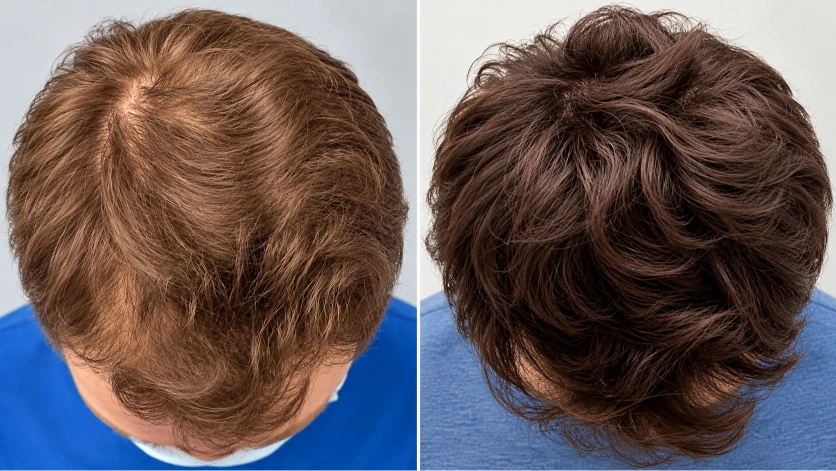
Hair can grow back in many cases, but it depends on why you’re losing it. Some people recover much of their previous fullness, while others need ongoing treatment to slow thinning or improve growth.
Will Hair Grow Back After Temporary Shedding?
If your hair is shedding because of a temporary problem, it often starts growing normally again after the cause has passed or been treated.
However, hair grows slowly. You may notice less shedding before your hair starts looking fuller. Even when new hairs begin growing, it can take several months for them to become long enough to make a visible difference.
For many people, excessive shedding improves over several months. Recovery can take longer when the cause continues or more than one problem is involved.
Try not to judge your progress from a single wash or brushing session. Changes in hair fullness are easier to notice over time.
Can Pattern Hair Loss Be Slowed or Treated?
Pattern hair loss usually continues over time without treatment. However, some treatments can help slow further thinning and support hair growth in suitable patients.
Commonly used options include medicines such as minoxidil or finasteride, along with certain light-based treatments and other hair restoration procedures. A healthcare provider can help you decide which, if any, suit your needs. These options don’t work the same way, and not every treatment is right for everyone.
Results depend on how much hair has been lost, how long thinning has been happening, and the treatment used. Some people notice better hair coverage, while others may mainly benefit from keeping the hair they still have.
Treatment can take several months to show visible changes. Some methods also require continued use to maintain results. It’s important to understand the possible benefits, side effects, and costs before starting.
What Can You Do While You’re Figuring Out the Cause?
If you’re worried about thinning hair, you may feel tempted to try every shampoo, oil, or supplement you see online. However, buying more products won’t necessarily solve the problem.
Start with simple hair-care habits. Wash your hair gently, use conditioner when needed, and avoid pulling it tightly into hairstyles that cause tension. Try to limit excessive heat from straighteners and curling tools, especially if your hair breaks easily.
Eating regular, balanced meals is also important. Your body needs enough protein and other nutrients to support healthy hair growth. However, taking extra vitamins won’t automatically make your hair thicker. Some supplements can even cause problems when taken in large amounts.
If you think a medicine is causing hair shedding, don’t stop taking it on your own. Speak with the healthcare professional who prescribed it.
Most importantly, don’t blame yourself for every hair that falls out. Gentle care can reduce damage, but it can’t prevent all forms of hair loss. Finding the cause is more useful than trying random products.
Get Help With Hair Thinning at Joi Med in Greenville, SC
Noticing changes in your hair can be frustrating, especially when you don’t know why they’re happening. Understanding the cause is an important first step toward choosing suitable care.
At Joi Med Regenerative Wellness and Aesthetics, we offer hair restoration services for people concerned about thinning hair. Both men and women see us for hair shedding and hair loss. Different types of hair loss need different approaches, so your care should be based on your individual needs.
Concerned about ongoing shedding or gradual thinning? Explore our hair restoration services in Greenville, SC, or contact our team to book a consultation.
Joi Med Regenerative Wellness and Aesthetics
409 Mills Ave, Suite 205, Greenville, SC 29605
Call: (864) 887-4281